
PEPTIDES
$129.00
⚠️ For Research Use Only — This product is not intended for human consumption. By purchasing, you confirm you are a qualified researcher.
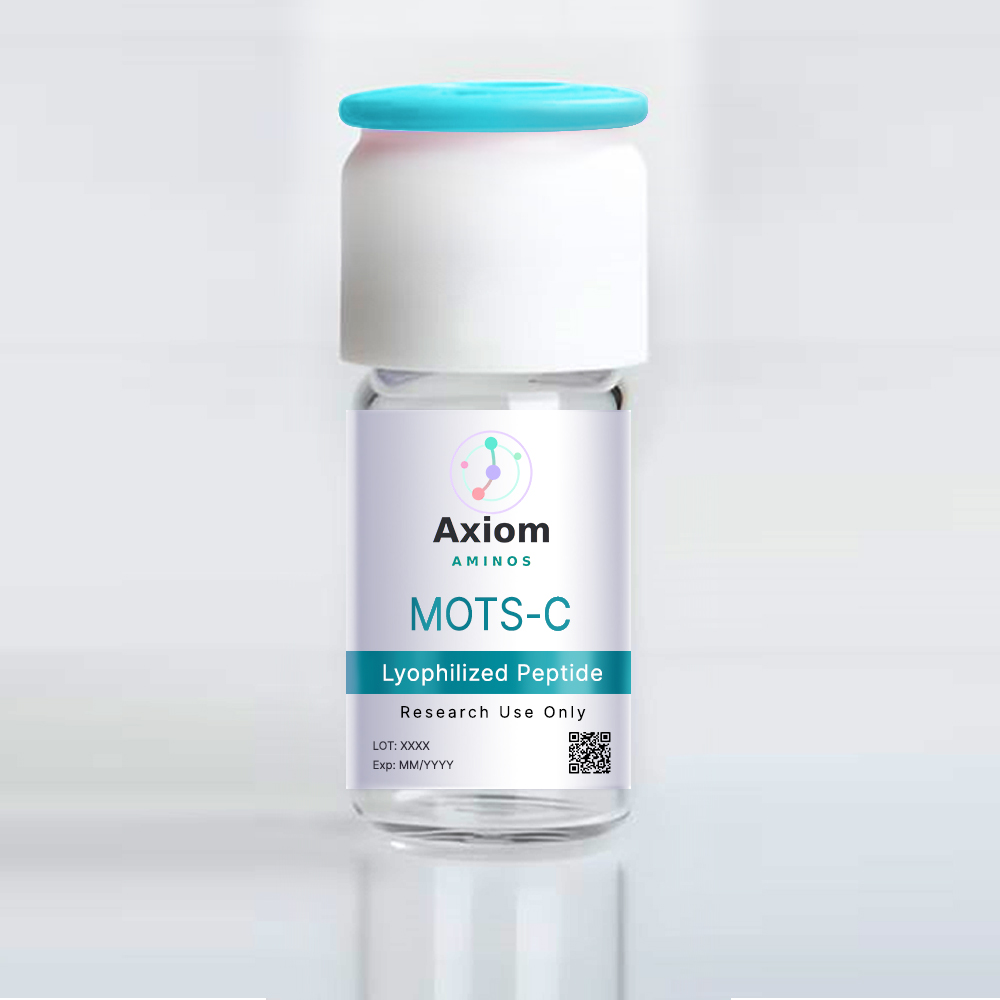
MOTS-C (Mitochondrial Open Reading Frame of the Twelve S rRNA Type-C) is a 16-amino acid peptide encoded within the mitochondrial genome. As a mitochondrial-derived peptide, MOTS-C represents a novel form of retrograde mitochondrial-to-nuclear signaling. This research peptide activates AMPK-dependent metabolic pathways and is studied in preclinical models examining cellular energy sensing, glucose metabolism, and exercise-responsive metabolic adaptation.
MOTS-C was discovered by Lee et al. in 2015 as a peptide encoded by the 12S rRNA gene of the mitochondrial genome. Its identification established that mitochondria can produce bioactive signaling peptides that regulate nuclear gene expression and systemic metabolism, a concept termed mitochondrial-nuclear communication or mitonuclear crosstalk. MOTS-C activates AMPK signaling, which regulates glucose uptake, fatty acid oxidation, and mitochondrial biogenesis. Research has demonstrated that MOTS-C levels respond to metabolic stress and exercise, suggesting it functions as an endogenous exercise-responsive factor. Published studies have shown that MOTS-C translocates to the nucleus under metabolic stress conditions, where it regulates gene expression through interaction with ARE (antioxidant response element)-containing promoters (Lee et al., Cell Metabolism, 2015). This dual role as both a metabolic signaling molecule and a transcriptional regulator makes MOTS-C a unique research tool.
MOTS-C activates AMPK through mechanisms involving disruption of the folate-methionine cycle and subsequent effects on purine biosynthesis, leading to AICAR accumulation, a known AMPK activator. AMPK activation drives downstream effects including GLUT4-mediated glucose uptake, ACC phosphorylation (inhibiting lipogenesis), and PGC-1α-mediated mitochondrial biogenesis. Under metabolic stress, MOTS-C translocates from the cytoplasm to the nucleus, where it interacts with transcription factors at ARE-containing promoters to regulate stress-responsive gene expression. This nuclear translocation represents a direct mitochondrial-to-nuclear communication pathway.
MOTS-C acts through AMPK activation via a unique mitochondrial-derived pathway, while SLU-PP-332 activates metabolic gene programs through ERR nuclear receptors, and 5-Amino-1MQ modulates NAD+ through NNMT inhibition. Each compound addresses different aspects of cellular energy regulation.
Related products in the Axiom Research Supply catalog: 5-Amino-1MQ, SLU-PP-332.
Reconstitute in sterile water. Store reconstituted peptide at 2–8°C. Lyophilized storage at -20°C. Minimize freeze-thaw cycles.
Axiom Research Supply provides MOTS-C at ≥98% (HPLC verified), verified through independent HPLC analysis with third-party testing documentation. Every batch undergoes rigorous quality control including identity confirmation, purity assessment, and endotoxin testing. Our peptides are properly lyophilized and shipped with cold-chain protocols to maintain stability from production to your laboratory. Axiom Research Supply is committed to advancing metabolic peptide science with precision, reproducibility, and dedicated research support. Access our educational resources including the Axiom Research Supply Metabolic Peptide Research eBook for comprehensive scientific background.
| Product Name | MOTS-C |
| Available Sizes | Multiple dosage options available — see product listing |
| CAS Number | 1627580-64-6 |
| Molecular Formula | C78H120N22O23S2 |
| Molecular Weight | 1805.07 g/mol |
| Purity | ≥98% (HPLC verified) |
| Physical Form | Lyophilized Powder |
| Storage | Store at -20°C, protect from light |
| Peptide Class | Mitochondrial-Derived Peptide (MDP) |
| Key Receptor Targets | AMPK pathway activation (intracellular signaling) |
| Research Applications | AMPK signaling, mitochondrial-nuclear communication, glucose uptake models, exercise physiology, metabolic stress research |
Reviews
There are no reviews yet.