
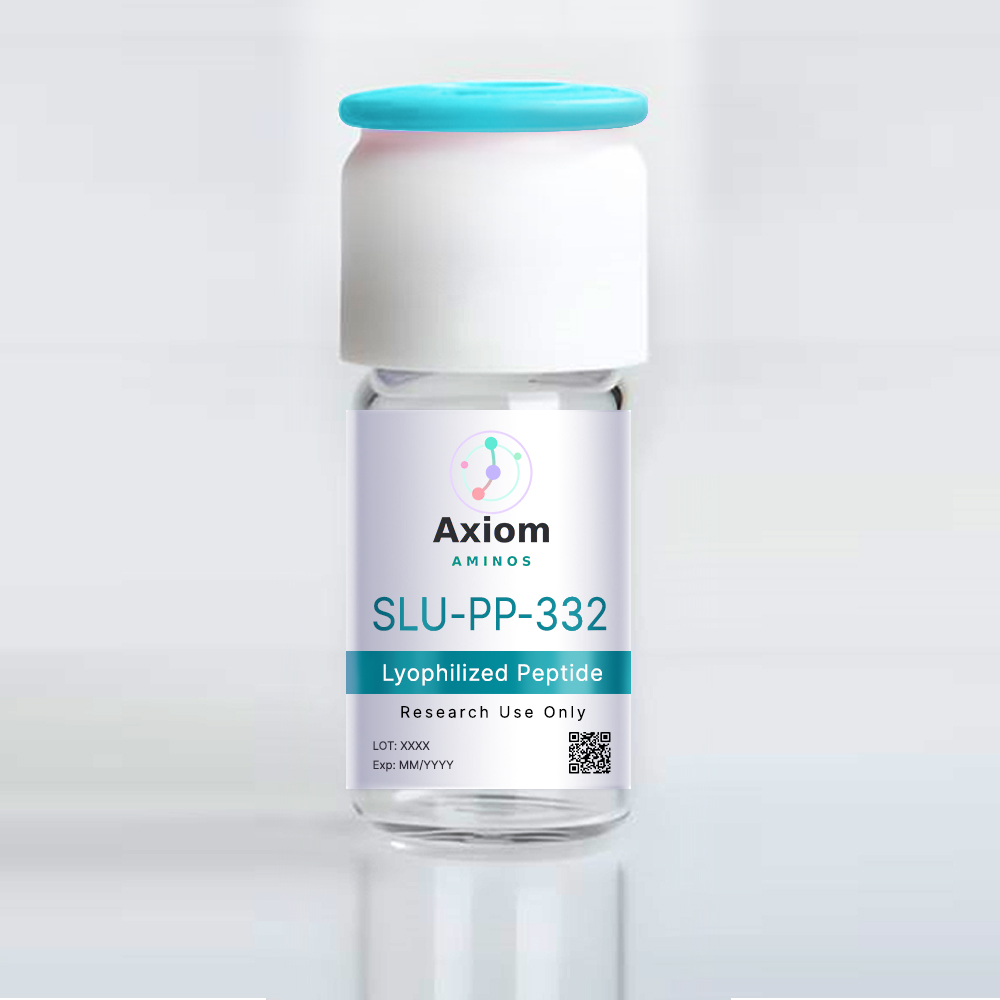
PEPTIDES
SLU-PP-332 is a synthetic small molecule agonist of estrogen-related receptors alpha and gamma (ERRα/γ), nuclear receptors that regulate mitochondrial biogenesis, fatty acid oxidation, and oxidative m…
$30.00
⚠️ For Research Use Only — This product is not intended for human consumption. By purchasing, you confirm you are a qualified researcher.
SLU-PP-332 is a synthetic small molecule agonist of estrogen-related receptors alpha and gamma (ERRα/γ), nuclear receptors that regulate mitochondrial biogenesis, fatty acid oxidation, and oxidative muscle fiber gene programs. This research compound is studied as an exercise-mimetic agent in preclinical models examining how ERR activation reproduces metabolic adaptations typically associated with endurance exercise training.
SLU-PP-332 was developed by researchers at Saint Louis University as part of efforts to identify pharmacological activators of exercise-responsive metabolic pathways. ERRα and ERRγ are orphan nuclear receptors that regulate transcription of genes involved in oxidative phosphorylation, fatty acid oxidation, and mitochondrial biogenesis, representing key molecular mediators of exercise adaptation. SLU-PP-332 activates ERRα and ERRγ transcriptional programs, driving expression of genes including PGC-1α coactivation targets, mitochondrial electron transport chain components, and oxidative muscle fiber markers. Published research has demonstrated that ERR activation with SLU-PP-332 enhances skeletal muscle oxidative capacity and shifts fiber type composition toward fatigue-resistant phenotypes in preclinical models (Kim et al., various studies). Investigators use this compound to dissect the molecular mechanisms through which exercise produces metabolic adaptations, and to study whether pharmacological ERR activation can recapitulate specific benefits of physical activity.
SLU-PP-332 binds to the ligand-binding domains of ERRα and ERRγ, stabilizing active conformations that recruit coactivator proteins including PGC-1α and SRC family members. This transcriptional complex drives expression of nuclear-encoded mitochondrial genes, fatty acid oxidation enzymes (CPT1, MCAD, LCAD), and oxidative phosphorylation components. In skeletal muscle, ERR activation promotes expression of slow-twitch (Type I) fiber genes including troponin I (slow), myoglobin, and succinate dehydrogenase. Downstream effects include increased mitochondrial density, enhanced fatty acid oxidation capacity, and improved oxidative metabolic efficiency.
SLU-PP-332 acts through nuclear receptor transcription (ERRα/γ), while MOTS-C activates AMPK signaling for metabolic effects, and 5-Amino-1MQ targets NNMT for NAD+ modulation. These compounds address different nodes of cellular energy metabolism.
Related products in the Axiom Research Supply catalog: 5-Amino-1MQ, MOTS-C.
Dissolve in DMSO for stock solutions. Store at -20°C. Prepare working solutions fresh in appropriate vehicle. Protect from light.
Axiom Research Supply provides SLU-PP-332 at ≥98% (HPLC verified), verified through independent HPLC analysis with third-party testing documentation. Every batch undergoes rigorous quality control including identity confirmation, purity assessment, and endotoxin testing. Our peptides are properly lyophilized and shipped with cold-chain protocols to maintain stability from production to your laboratory. Axiom Research Supply is committed to advancing metabolic peptide science with precision, reproducibility, and dedicated research support. Access our educational resources including the Axiom Research Supply Metabolic Peptide Research eBook for comprehensive scientific
| Product Name | SLU-PP-332 |
| Available Sizes | Multiple dosage options available — see product listing |
| CAS Number | 2172820-62-7 |
| Molecular Formula | C26H22FNO4 |
| Molecular Weight | 431.45 g/mol |
| Purity | ≥98% (HPLC verified) |
| Physical Form | Lyophilized Powder |
| Storage | Store at -20°C, protect from light |
| Peptide Class | ERRα/γ Agonist (Small Molecule) |
| Key Receptor Targets | Estrogen-Related Receptor alpha (ERRα) and gamma (ERRγ) |
| Research Applications | Exercise-mimetic research, mitochondrial biogenesis, fatty acid oxidation, muscle fiber type studies, ERR signaling |
Reviews
There are no reviews yet.