
PEPTIDES
$119.00
⚠️ For Research Use Only — This product is not intended for human consumption. By purchasing, you confirm you are a qualified researcher.
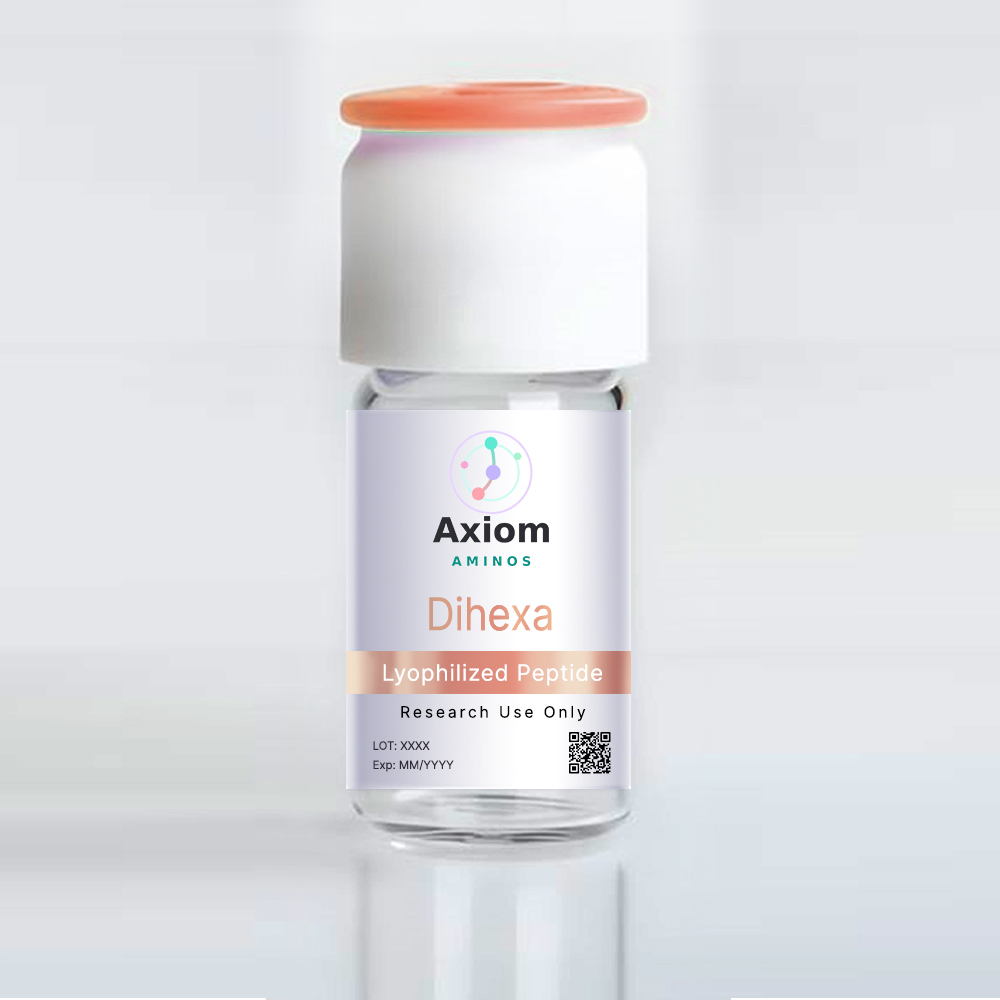
Dihexa (N-hexanoic-Tyr-Ile-(6)-aminohexanoic amide) is a synthetic small molecule derived from angiotensin IV that activates the hepatocyte growth factor (HGF)/c-Met receptor system. This research compound promotes dendritic spine formation and synaptic connectivity through c-Met signaling. Dihexa is studied in preclinical models of synaptic plasticity, neurotrophic signaling, and cognitive function.
Dihexa was developed by researchers at Washington State University through structure-activity optimization of angiotensin IV-derived compounds. While angiotensin IV was known to enhance cognitive function through AT4 receptor (IRAP) binding, dihexa was found to act through a distinct mechanism: potentiation of the HGF/c-Met receptor system. HGF is a pleiotropic growth factor that promotes neuronal survival, synaptogenesis, and dendritic spine formation through c-Met receptor tyrosine kinase activation. Published research has demonstrated that dihexa enhances HGF/c-Met signaling at subthreshold concentrations, amplifying synaptogenic and neurotrophic effects without directly binding c-Met (Benoist et al., Journal of Pharmacology and Experimental Therapeutics, 2014). The compound’s mechanism of facilitating endogenous HGF signaling distinguishes it from direct receptor agonists and makes it a valuable tool for studying growth factor-mediated synaptic plasticity.
Dihexa potentiates HGF binding to the c-Met receptor tyrosine kinase, enhancing receptor dimerization and autophosphorylation. Activated c-Met triggers multiple downstream signaling cascades including PI3K/Akt (cell survival), MAPK/ERK (synaptic plasticity), and STAT3 (gene transcription). These pathways converge to promote dendritic spine formation, synaptogenesis, and neuronal survival. Dihexa’s mechanism is allosteric potentiation rather than direct agonism, amplifying the effects of endogenous HGF at concentrations that would otherwise be subthreshold for c-Met activation.
Dihexa targets HGF/c-Met for synaptic plasticity, while Semax upregulates BDNF/NGF through melanocortin receptors, and Selank modulates GABAergic/monoamine signaling. Each peptide addresses different neurotrophic and neuromodulatory pathways.
Related products in the Axiom Research Supply catalog: Semax, Selank, Epithalon.
Dissolve in DMSO for stock solutions. Store at -20°C. Prepare working dilutions in appropriate vehicle fresh. Protect from light.
Axiom Research Supply provides Dihexa at ≥98% (HPLC verified), verified through independent HPLC analysis with third-party testing documentation. Every batch undergoes rigorous quality control including identity confirmation, purity assessment, and endotoxin testing. Our peptides are properly lyophilized and shipped with cold-chain protocols to maintain stability from production to your laboratory. Axiom Research Supply is committed to advancing metabolic peptide science with precision, reproducibility, and dedicated research support. Access our educational resources including the Axiom Research Supply Metabolic Peptide Research eBook for comprehensive scientific background.
| Product Name | Dihexa |
| Available Sizes | Multiple dosage options available — see product listing |
| CAS Number | 1401708-83-5 |
| Molecular Formula | C21H38N4O4 |
| Molecular Weight | 398.55 g/mol |
| Purity | ≥98% (HPLC verified) |
| Physical Form | Lyophilized Powder |
| Storage | Store at -20°C, protect from light and moisture |
| Peptide Class | HGF/c-Met Receptor System Activator |
| Key Receptor Targets | HGF/c-Met receptor system |
| Research Applications | HGF/c-Met signaling, synaptic plasticity, dendritic spine formation, neurotrophic factor research, cognitive function models |
Reviews
There are no reviews yet.